
VIDEO
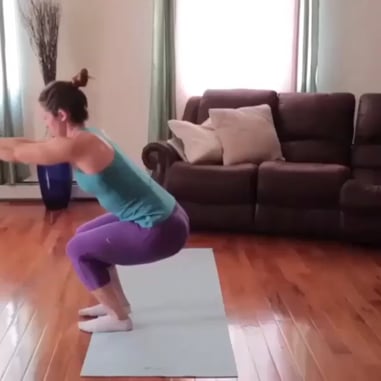
Walking Squats, Lunge Variation, Glute Bridge Variation
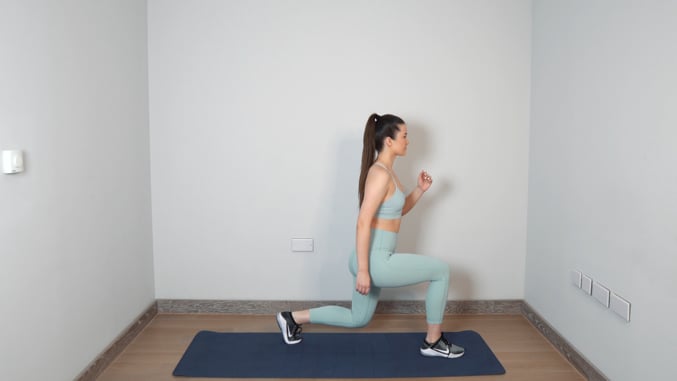
1.Start with the squat position with your chest up and knees bent. Try to walk without changing this position. 2.Stand straight with your feet shoulder width apart. Step forward with the right leg into the lunge position, and lower the left knee almost to the floor. Keep your back straight and do not touch knee. Stand upright getting back to starting position and repeat with opposite leg. 3.Lay back on a mat with your shoulders on the mat, your knees bent, feet on the chair, and your palms on the mat. Start moving your gluteus up and down in a smooth and slow tempo.
save to ...
RECOMMENDED FOR YOU

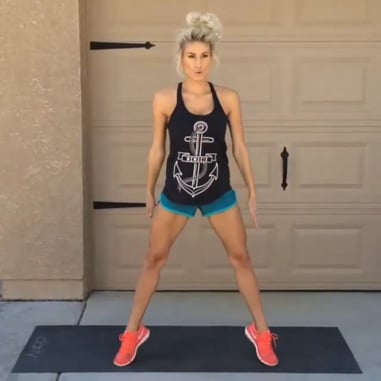

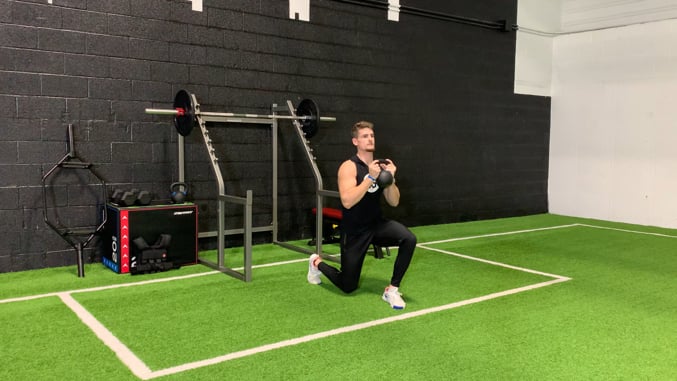
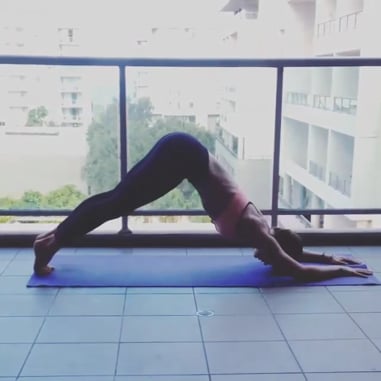
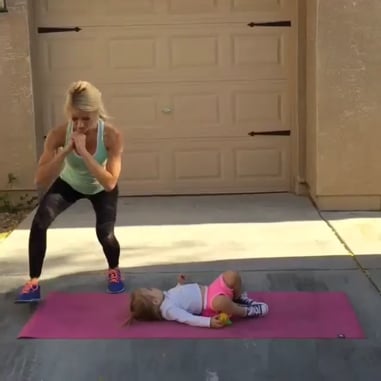
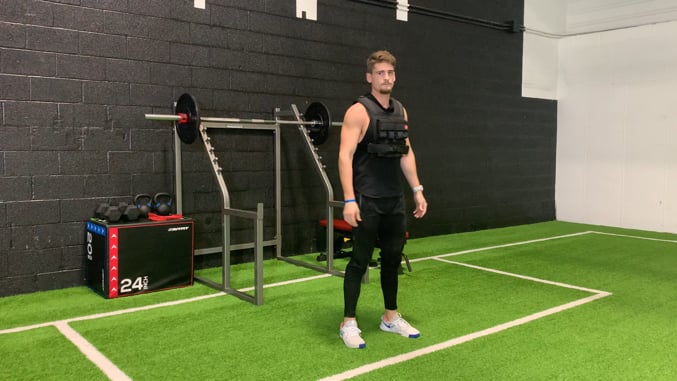
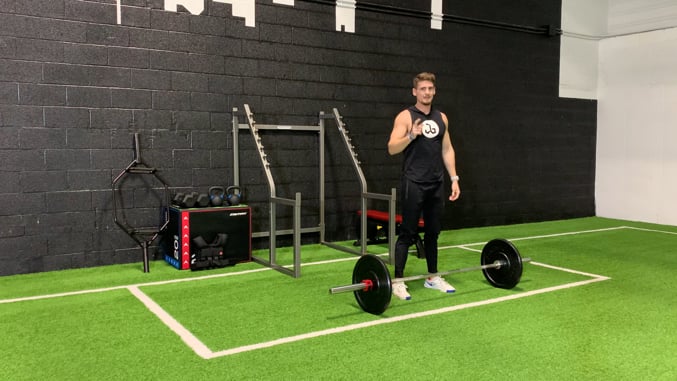
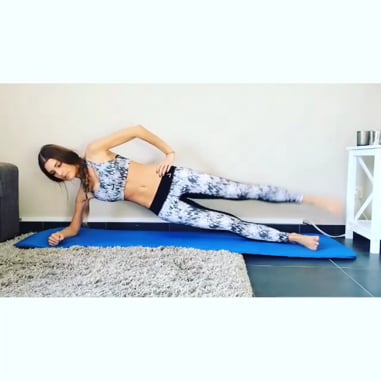
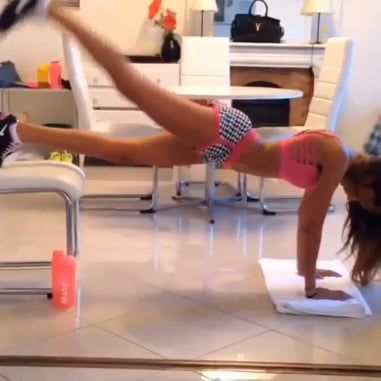
Blog
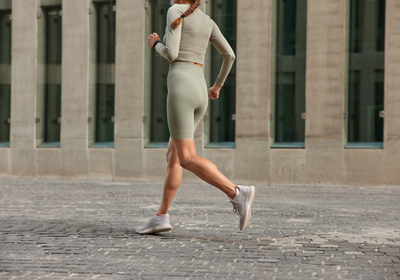
In the initial stages of training, while people focus on working the chest, arms, and back, the calf muscles are often neglected. As a result, exercises to strengthen the calves are delayed or rarely performed, resulting in a lack of progress. The calf muscles, like the deeper muscles of the back, get little rest during the day because they must support the weight of the body, help maintain balance, and stabilize the joints when walking. This means it is at a lower level of development and the approach to working with it should be different.
Thus, we decided to share some exercises for strengthening your calves. Let’s check them out.
Calf 45
Of all the exercises intended to develop the calf muscles, this exercise is one of the most challenging. It involves changing the angle of the legs, which involves not only the calves but also the soleus muscles. To perform this exercise, you will need the Gackenschmidt's Machine. Depending on the design, you will stand in front of it or not. Set an appropriate working weight. This is calculated as the arithmetic mean of the working weights from the previous two exercises. Then adjust the weights according to the load. Then lower the heel and stretch the calf as much as possible. Lift with the toes. Hold under extreme tension for 1-2 seconds.
Dumbbell Calf Raises
This exercise is designed for all levels of athletes and is considered a basic exercise to build calf muscles. Start with standing on a wooden block. You can do this in Smith by placing a step platform under your feet and placing a barbell on your shoulders. Hold your body in a straight position. If you need extra weight, you should take dumbbells or kettlebells. Next, lower your heels under the bar and stretch your ankles as much as possible. Stand up on your toes in a powerful impulsive movement. Hold this position for 1-2 seconds and pull your calves up. Slowly lower yourself back to the starting position.
Squat Calf Raises
This exercise is great for lazy workouts and will be a great option for beginners. Sit on the seat of the training machine. Place your toes on the support step. Bringing your heels down to the floor as far as possible, lower the lever with the soft stop to your knee and lock it.
Leg Press
Lie down on a leg press machine. Find a platform where your legs are straight. Fix the speed. You only need to do two movements. Removing the platform from your foot, squeeze it with your toes. Return your toes to their original position.
It is important to know that posture has a much greater impact on the development of the shin and calf muscles than movement. Flat feet, if not taken into account and compensated for, can also prevent the shaping of the calves. To improve the calves without exercising, the selection of the proper footwear and a corrected gait is necessary.
Well-trained calves will help you perform certain exercises better as well as make your legs look great. So take another look at these exercises and be sure to try them next time.
Read more

The Kardashians have created many beauty trends, one of which is having beautiful buttocks. So, in this article, we'll talk about building great gluteus muscles so you can look as attractive as Kim, Kourtney, and Khloe. Let's begin by looking at the anatomy. The glutes are made up of three main parts.
The gluteal maximum muscles, which are the largest muscles in the body, help to maintain balance when walking and running. They allow your legs to move sideways and are also responsible for contouring the shape of the buttocks.
The gluteus medius is overlaid in part by the gluteus maximus and is located at the top of the pelvis. It is involved in leg extension, lateral flexion, and body stabilization during the movement.
Finally, below is the gluteus minimus. Both are in charge of leg induction and body stabilization, as well as shaping the thigh line.
Training for the glutes
Building your glute muscles isn't easy, particularly when you're on a tight schedule. However, by working out at least three times a week and never giving up, you will quickly reach your goal. To help you achieve your goals, we've compiled the best exercises for your gluteus muscle development.
Deep squat with a barbell
This is one of the basic exercises that help to develop this muscle effectively. From the starting position - with your feet apart - lower your pelvis below the knees. Keep your lower back straight and make sure the knees do not go over your feet. Spreading your legs wider apart puts more pressure on your hips.
Romanian deadlifts
Stand up straight with a slight bend at the waist. Holding the dumbbells in both hands, bend over and pull your pelvis backward. Reaching a point just below your knees, return to start.
Dumbbell split squat
Exercise with a straight back and one leg stepping forward while the other leg is thrown into a brace behind you. Squat down and perform the exercise with both legs.
Back lunges
From the standing position, take a large step backward and drop down to form a bent-over position. Return to start and repeat this exercise for the other leg. Make sure your knee is bent at a right angle and not sticking out past your toes, do 20-30 reps. It is important to step backward precisely, maintaining rhythm and balance.
Having great gluteus is everyone's dream, and luckily, developing these muscles isn't difficult if you know the right exercises. So why not take advantage of our tips and start working towards your goal right now?
Read more

СWorking on the core muscles is not only essential for good looks, but also for your health. In this article, we will talk about core muscles and how to develop them. So without any further ado, let us begin.
Core Muscles: What Do They Consist of?
To put it simply, core muscles consist of two main groups, which are central and peripheral. The central muscles resemble a sac that protects internal organs by covering the abdominal cavity. In other words, we need these muscles to keep the vital organs safe. In fact, if we didn’t have these muscles, a slight kick in the abdominal area would cause significant damage to vital organs. Central muscles can be divided into several parts, which are:
Front - abs
Lateral parts - oblique muscles and the surrounding muscles
Back - the muscles that support the spine
Upper wall - diaphragm
Lower wall - pelvic floor muscles
The second group of core muscles, the peripheral muscle group, consists of the trapezius, the latissimus dorsi muscle, the pectoralis muscle, the buttocks, and the muscles of the shoulder girdle. These muscles are essential for our posture and back health, which means that developing those is rather important for everyone who wants to be healthy and look beautiful.
Both central and peripheral core muscle groups are extremely significant for our health, posture, as well as the way we look. Therefore, in the next paragraph, we are going to talk about the best exercises for strengthening these muscles.
Best Workouts for Strengthening Core Muscles
So we made it pretty clear that developing core muscles is important for pretty much everyone. So what exercises can you do to strengthen these muscles? Well, here they come:
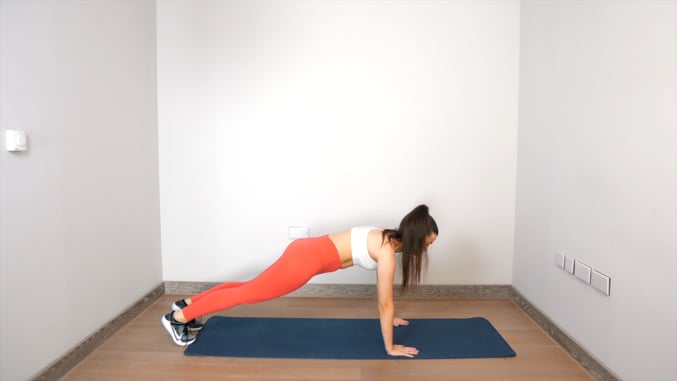
High plank
Supine toe tap
Hollowman
Bird Dog
Crunches
Bicycle crunch
Superman
Warrior crunch
Supine leg lifts
Elbow to knee
Bridge
Mountain climber
V-sit
V-ups
Side plank
Plank shoulder taps
Turkish get-up
Elbow plank twists
As you can see, there are many workouts that will no doubt help you develop core muscles and eventually become healthy and fit. So why don’t you grab your fitness mat and try at least some of these useful exercises to see their effectiveness yourself?
Wrapping Up
Not only are core muscles essential for beautiful abs, but also rather important for your back health and posture. Furthermore, these muscles protect your internal organs, which is a pretty important feature. Therefore, if you regularly train but you always avoid core exercises thinking they are not as important as the workouts for your legs or arms, you better stop doing that because core muscles are perhaps the most important muscle group in your body.
Read more

After the abdominal muscles are prepared, the obliques are the next step. The obliques are several groups of abdominal muscles on either side of the main body. The external obliques are at the top and the internal obliques are at the bottom. Training them with functional exercises includes flexion, twisting, and other rotational movements. In order to properly exercise the lateral muscles, however, it is important to remember that most oblique exercises also involve the other abdominal muscles, especially the medial transverse muscles. Therefore, you need to engage certain areas of the abdominal abs in a conscious manner.
Lateral twists
The basic exercise for the abdominal obliques is the lying lateral twist. Begin with lying on your side with your arm bent at the elbow to support your head. Extend the elbow toward the leg slowly, performing a purposeful contraction of the abdominal obliques.
Prone lateral push-ups
This exercise is fine for developing the neuromuscular links between the abs and the brain. Lying on the back, pull your left elbow in a slow tempo towards the opposite knee. Perform 12-15 reps on each side, and try to achieve a special burning feeling.
Lateral push-ups on a fitness ball
The advantage of this exercise is that you achieve a wide range of motion by bending your body slowly and controlling each movement over the ball. As you lift, feel your side abdominals twist and stretch as you descend. Place your arms behind your neck and do not move them apart.
Cross contacts
Make sure that your legs are straightened up while you are lying on your back. Place your hands on the back of your head and lift your head and shoulder blades slightly. Then do a twisting motion, extending your legs with the opposite arm straight. Perform the same movement for the other side. Repeat at least 20 times.
Lift your hips
Make sure you are lying straight on one side. Your feet should be lying on top of each other and your free arm fixed at the waist. You need to lift your torso so that your body line is completely straight at peak amplitude. At the apex, pause briefly to emphasize the work of the obliques. As you lower your torso, your thighs are only gently touching the ground and the muscles are not fully relaxed.
Developed obliques provide the framework for your abs and make them look amazing, so if you really want to have a great abdomen, you should work both your abs and obliques.
Read more
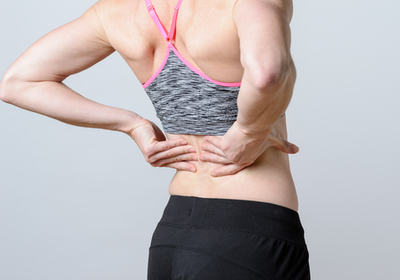
Lower back muscles easily get sore and injured as well as are rather challenging to train. At the same time, these muscles are essential for one’s back health. So what is the anatomy of lower back muscles, and how to develop them? This is exactly what we are going to talk about in this article.
Lower Back Muscles: Anatomy & Functions
The lower back muscle group consists of several muscles, which are multifidus muscles, erector spinae, spinalis, and latissimus dorsi. These muscles are essential for posture, moving, and even involved in the walking process. In fact, lower back muscles are super important for normal functioning, and those people who have suffered any lower back injuries know it. In addition to that, these muscles are actively involved in the special moves in certain sports like gymnastics as well as in various dance styles. So even though these muscles seem to be small and unimportant, yet they actually have lots of functions.
Why Is It Important to Develop Your Lower Back Muscles?
Many people believe that, in terms of the spine, you only need to work on the trapezius and upper back since these muscles are essential for the right posture. Certainly, it’s not exactly true. In fact, you have to work on your entire spine to harmoniously develop all the muscles of your back. Plus, the lower back easily gets injured, especially if you lift something heavy, but if you have strong and developed lower back muscles, you can reduce the risks of having such an injury. So no matter if you are an office worker or a professional athlete or dancer, you need to work on your lower back muscles.
Workouts for the Lower Back Muscles
So how can you make your lower back muscles stronger and therefore lower your chances of getting a nasty injury? Well, here are some exercises you might want to try:
Rack pull
Harvesting apples
Bent over row
Side stretching
Barbell good morning
Belly roll
Back extension
Side plank
Superman
Glute hamstring raise
These simple exercises will no doubt help you make your lower back stronger and healthier, so do not hesitate and give them a try.
Final Thoughts
Developed lower back muscles are not only needed for professional athletes or dancers but also for those people who want to maintain their back health. So make sure to include at least a few lower back workouts into your exercise routine. Trust us, you won’t regret it.
Read more